

Before the birth of the modern hot air balloon, Tony Fairbanks would drag his young son Mike Fairbanks out of bed to join a small group of men in a parking lot in front of a rental garage to spend three hours in the sun.
The Balloon Club of America (BCA), incorporated as a sporting balloon club in the year 1952 owned and flew two massive 80,000 cu.ft. gas balloons. These balloons were constructed by Goodyear in Akron, Ohio from 1926 through 1932. The purpose of these balloons, during World War II, was to train naval aviators as blimp pilots. The blimp was used by the military on submarine patrol to protect the coastal waters of the United States.
These balloons when filled with flammable cooking gas will travel with the pilot and passengers standing in a small wicker basket on the tip of the wind, the exact speed of the wind. The rip panel which is designed to open a large hole in the top of the balloon by pulling a rope attached to the basket has a similar function as the rip panel in a hot air balloon. In a high wind and at times in a moderate wind the forward movement of the balloon must be stopped before hitting street wires or a house or a line of tall trees.
The rip panel in a Goodyear constructed free balloon was a strip of reinforced rubberized cotton about eight inches wide and stretching from the equator to the top of the balloon envelope. Unfortunately, the balloons which were obtained as military surplus arrived without instruction on the cleaning and installation of the rip panel. It was obvious that the rip panels were held in place by glue.
A visit to a shoe repair store in Swarthmore, Pennsylvania resulted in the purchase of a tin of Non-Permanent glue. The cost was $8.00. There was a caution from the store manager that was not initially understood, that the glue would require several days to set or bond with a strength to hold the seams together.
When the rip panel was removed from the balloon and set on the ground or a long table, about three hours of hard work was required to clean the panel and install the panel into the balloon.
The old glue still sticking to the panel had to be entirely removed. Pieces cut from an automobile tire were used to carefully scrape the glue off the panel without causing damage and later an electric drill with a very soft wire brush attached. Once the panel was cleaned three layers of non-permanent shoe glue were applied to the panel and also to the balloon envelope on both sides of the large hole of which the panel would close. After working together to fit the panel exactly into the balloon to close the opening, rollers were used to assure a tight connection of the panel to the balloon envelope.
An early BCA flight resulted in the rip panel partially opening at 4400 feet above Cherry Hill, New Jersey. The rip panel was installed on a Saturday and the balloon was inflated and flew the following day on a Sunday. The balloon had flown across the city of Philadelphia and the Delaware River before the uncontrolled descent with a hard landing on an open field.
The name of the pilot is not important. Connie Wolf was in the basket as a passenger. The rip panel opened and the balloon immediately dropped toward the ground. The lower half of the balloon envelope folded upward which created somewhat of a parachute effect. The pilot reported that the basket hit the ground slightly in excess of 600 feet per minute and that if the balloon had been higher in the sky, the parachute effect was about to be lost.
As part of the chase crew, Tony and Mike Fairbanks stood under the balloon and watched the drop of the balloon from level flight to the ground. The sandbags, which were located in the bottom of the basket for ballast, were emptied over the sides of the wicker basket. Mike and Tony watched from below as even the empty sand bags and the two metal seats which attached to the side of the basket were thrown overboard. Later, the pilot told the crew there was time to brief the passengers on how to brace themselves for the landing.
For future gas balloon flights of the Balloon Club of America, the three day wait from the installation of the rip panel to the inflation of the balloon was a rule never broken.
Written by Michael Fairbanks
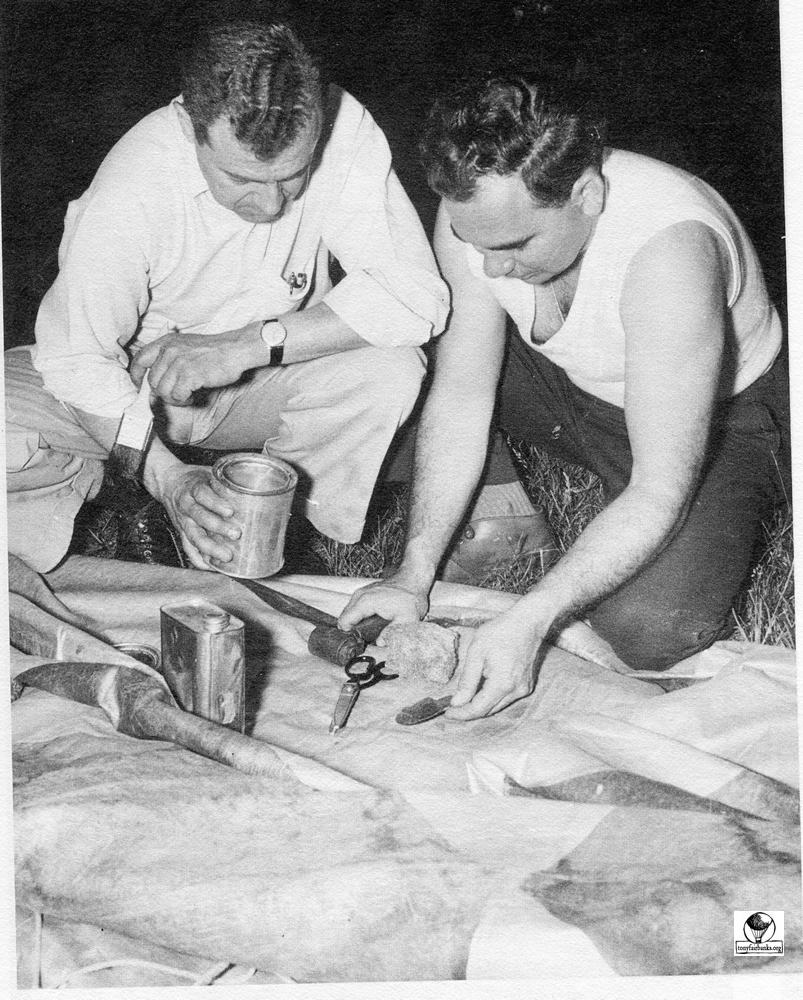
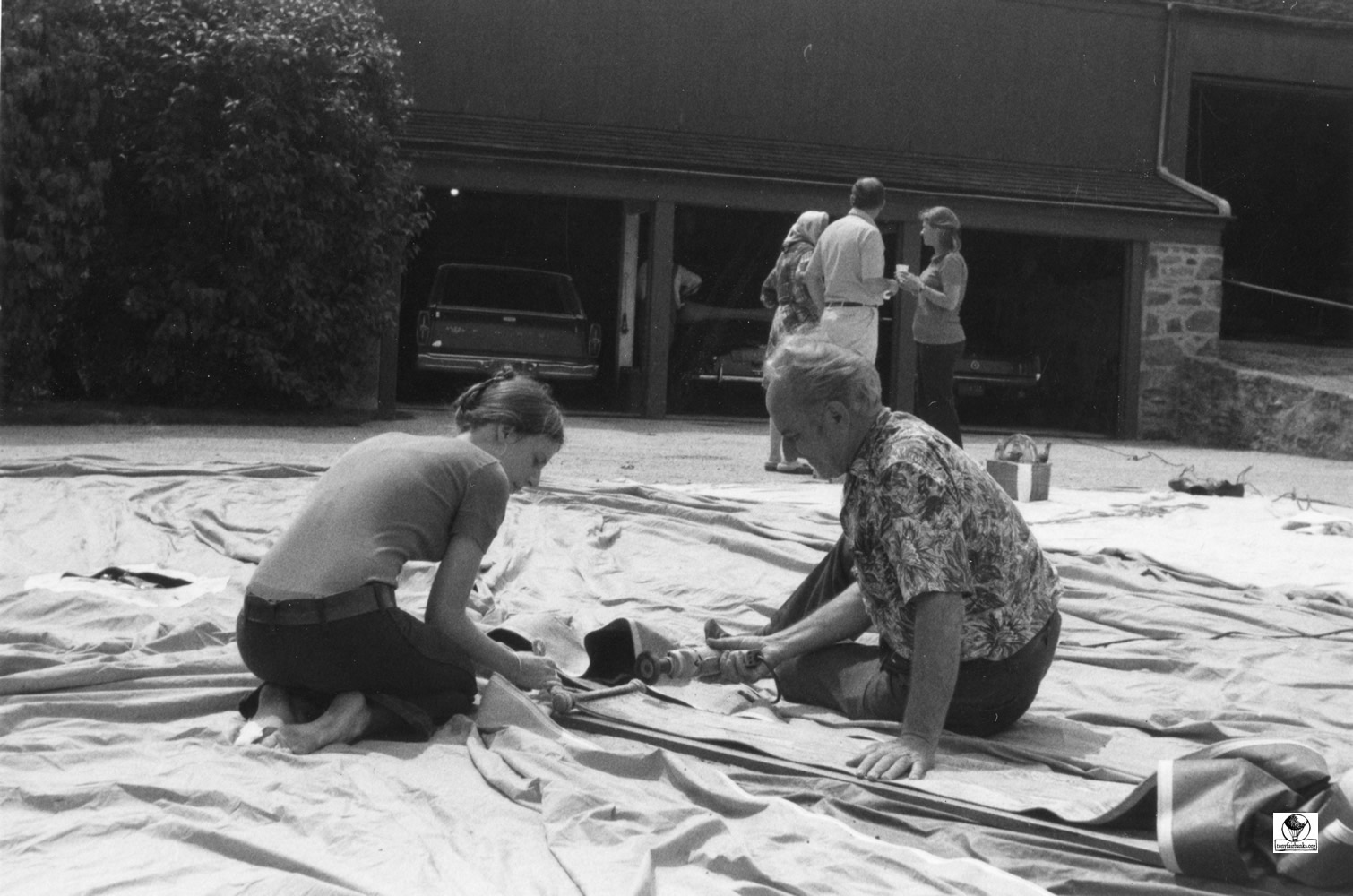
Once the rip panel is pulled, it needs to be glued back in place. The movie below shows that process.