THE IMPORTANCE OF THE DRAG ROPE IN THE LANDING OF A GAS BALLOON
The balloon hit the top of the trolley car fairly hard. The sound of the wicker basket banging onto the top of the trolley is difficult to forget. One thirty pound bag of sand was dropped from the basket just before impact but with minimal effect in the effort to avoid hitting the group of parked trolley cars. They didn’t take the time to open the bag of sand but dropped overboard the entire sandbag.
Sixty-Ninth Street in Philadelphia is a poor choice to land an 80,000 cu.ft gas balloon filled with flammable cooking gas. The date was November 12, 1960. The pilot was Anthony “Tony” Fairbanks. On board was Lillian Jean Fairbanks, Eleanor Vadala and Mike Fairbanks. The trolley cars were stored in a locked gated area with the access being the narrow road on which the balloon landed.
The inflation and launch of the balloon was from a small airport in Valley Forge, Pennsylvania. The winds were slow. Mike Fairbanks recalls, as a seventeen year old passenger, is that the pilot wanted to land and allow for a second flight so Francis Shields could gain hours and experience as a pilot-in-command. When a security guard opened the gate to allow the chase crew access to the gas balloon which was resting quietly on the road, Mike remembers him saying “don’t touch the middle rail or you will be electrocuted.”
Francis and Eleanor lifted off for the second flight of the day to land three hours later in Red Lion, New Jersey. They never went between the trolley cars to look for the missing sand bag.
The Balloon Club of America was incorporated as a sport balloon club in 1952. The first flight was on November 29, 1952 from Brookhaven, Pennsylvania. They had two large 80,000 cu.ft. gas balloons. The landing in the Sixty-ninth street trolley yard was the twenty-fifth flight of these large balloons.
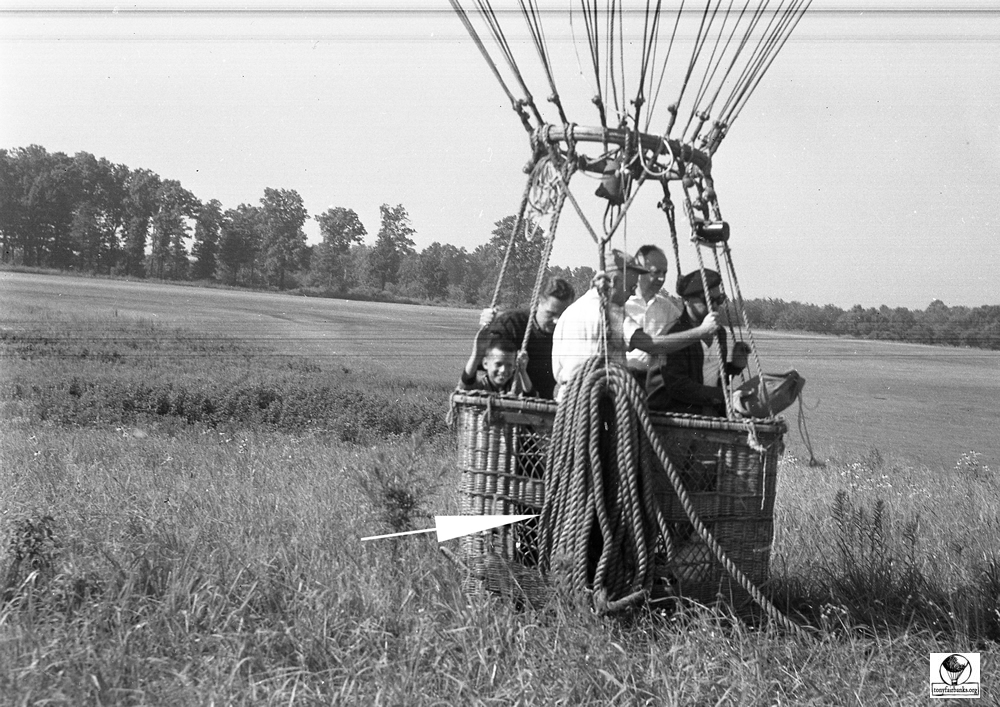
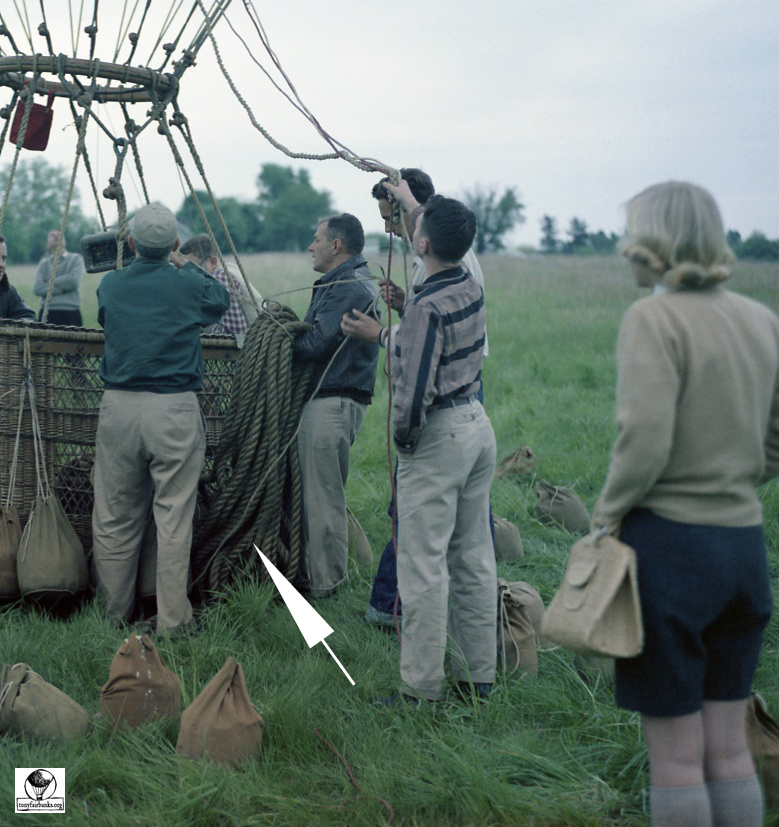
The drag rope carried on board a gas balloon is made from thick hemp and for the large gas balloons would be 110 feet in length and weigh thirty-five pounds. A gas balloon to launch or ascend higher in the sky will drop handfuls of fine sand over the side of the basket. Sand is also required for the descent to control the balloon to a soft landing.
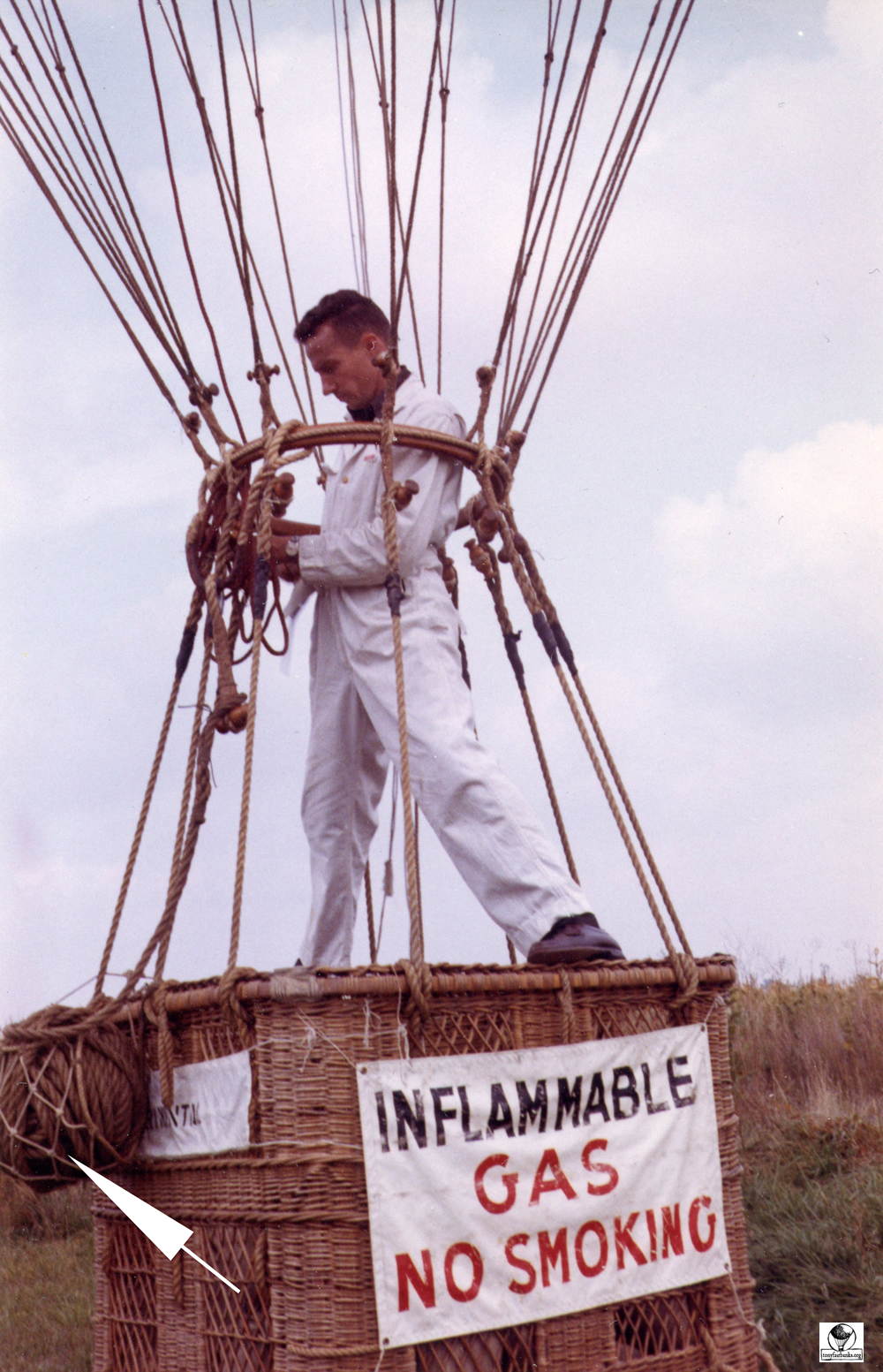
When the gas balloon descends close to the earth and the direction of travel indicates an acceptable landing site, the drag rope is dropped from the outside of the wicker basket where it is held in place by a small piece of twine. The weight of the drag rope being transferred to the ground slows the descent of the balloon. The drag rope acts as ballast. If a layer of wind close to the ground would cause the balloon to begin to ascend, the added weight of the drag rope leaving the earth prevents the balloon from lifting.
In light to moderate winds the drag rope acts as a sea anchor. As the drag rope falls onto the earth below and stretches to its full length, the weight and pull of the hemp rope along the ground slows or stops the forward movement of the balloon. In a strong wind the drag rope will have minimum effect on the forward motion of the balloon but acts to turn the balloon so the rip panel located on the top of the balloon is facing opposite of the direction of travel. This is important in a strong wind as the pilot will be pulling the red rope which is tied to the rip panel on the top of the balloon which results in a thirty foot opening in the envelope to release enough gas to deflate the balloon.
The drag rope is tied to the load ring on the side of the balloon where the rip panel is located. The weight of the drag rope turns the balloon so the rip panel is opened facing the wind. Otherwise when the rip panel is pulled in windy conditions the balloon envelope could possibly fold over upon itself which would trap the gas. The balloon would therefore be pushed by the winds until hitting an object to stop the forward travel.
The landing in the Trolley Yard placed the lives of the pilot and passengers in danger. It was not the decision of the pilot but a result of failure of the drag rope to uncoil. It was the practice of the Balloon Club of America to coil the drag rope as you would coil a water hose. Then the twine holding the drag rope to the side of the basket was cut with a knife the drag rope would drop to the ground below. The end of the heavy drag rope was attached to a wooden load ring above the heads of the passengers. The drop of the drag rope worked on the previous flights but not on this flight on this day.
The massive gas balloon slowly and ever so slowly descended toward a large golf course. At about seventy feet above the ground the pilot yelled to several men playing golf if they would be so kind to grab our rope to pull the balloon to a landing. The chase crew was delayed in the Philadelphia traffic. The twine was cut and the drag rope fell only fifteen feet as the coil failed to unroll.
Not being able to reach the drag rope the golfers ignored the balloon and returned to their game as the direction of the flight shifted to carry the balloon basket and balloon over a fence and into the trolley yard.
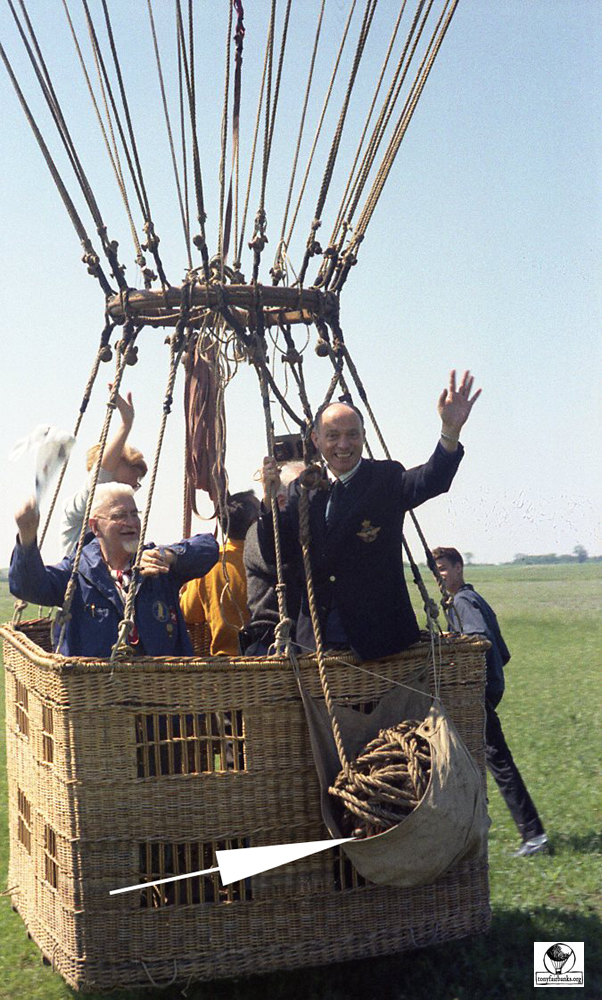
For all flights of the Balloon Club of America after this unfortunate landing, the drag ropes would be rolled into a ball which was placed in a cotton carrying case attached to the side of the wicker basket.
The drag rope in ballooning is specific to a gas balloon. The modern hot air balloons have handling lines which serve a different purpose.
Written by Michael Fairbanks